Whale Watching in Vietnam: A Rare Ecosystem Guide for Eco-Travellers
| ReviewWhale watching Vietnam exists within a unique gap: a country with more than 3,260 km of coastline, a rich maritime culture deeply rooted in whale worship, yet almost no published guide on actually observing whales in the wild. Whale Island Resort (Hon Ong Island, also known as Whale Island) is named after this long-standing cultural tradition and is located in Van Phong Bay – one of the most biodiverse marine areas in Vietnam. This guide explores the species you may realistically encounter, the best seasons, and why Van Phong Bay is one of the most ideal bases for whale watching.
Vietnam’s coastal waters and the giant marine life that lives here
Vietnam’s 3,260 km coastline borders the South China Sea, the Gulf of Thailand, and the Gulf of Tonkin. These tropical and subtropical waters are home to a range of recorded marine mammals, although they remain among the least studied groups in Southeast Asia.
Species recorded in coastal waters of Vietnam include:
-
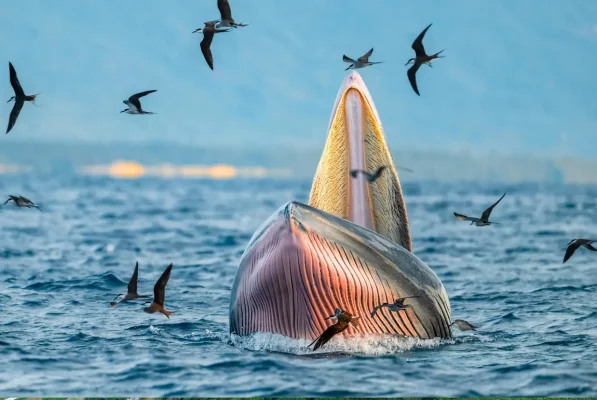
Bryde’s whale (Balaenoptera edeni): The most frequently sighted baleen whale along Vietnam’s coastline (Nha Trang Bay, Binh Dinh, Quy Nhon). Often seen feeding near the surface.
-
Sperm whale (Physeter macrocephalus): Occasionally observed in deep offshore waters; historically regarded with reverence and fear by coastal fishing communities.
-
Indo-Pacific humpback dolphin (Sousa chinensis): Common in nearshore waters and estuaries, including Van Phong Bay.
-
Indo-Pacific bottlenose dolphin (Tursiops aduncus): Frequently observed year-round in the bay.
-
Irrawaddy dolphin (Orcaella brevirostris): Found in the Mekong Delta and some coastal lagoons.
-
Whale shark (Rhincodon typus): The largest fish in the world. Although not a marine mammal, it is culturally associated with the whale worship tradition along the Vietnamese coast.
In addition, dugongs (Dugong dugon) were once recorded in seagrass habitats in Khanh Hoa province, but sightings are now extremely rare due to habitat loss from coastal aquaculture.
When is the best time for whale watching in Vietnam?
The feeding season for whales runs from February to May in Van Phong Bay, when whales follow seasonal blooms of jellyfish and plankton in the sheltered waters. This is one of the best opportunities for observing large marine life in Vietnam.
Dolphins and whales can be seen year-round, especially Indo-Pacific humpback dolphins and bottlenose dolphins around the channels between the bay’s 28 islands. Early morning is the best time, when boat traffic is low and dolphins are actively feeding.
Bryde’s whales are occasionally spotted in deeper waters near the mouth of the bay, particularly from March to July, when sea conditions are calmer. These sightings are less predictable compared to dolphins.
The best overall window to experience multiple species is during the dry season from February to May:
-
Calm seas and excellent underwater visibility up to 20 meters.
-
Water temperatures ranging from 26°C to 29°C.
-
Peak whale activity in feeding zones.
-
High dolphin feeding activity in the early morning hours.
Why Van Phong Bay is the best place for whale watching Vietnam
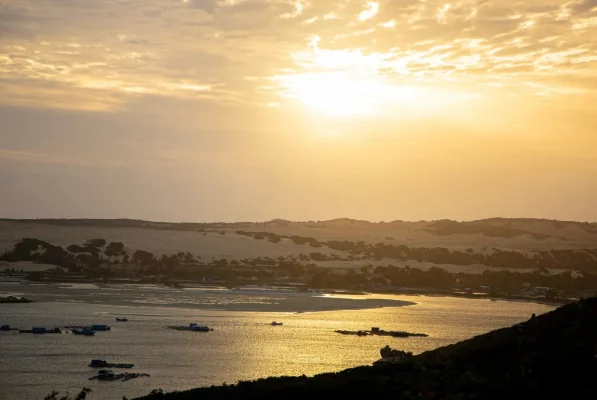
Van Phong Bay whale watching takes place in a 41,000-hectare sheltered bay with 28 islands, located about 100 km north of Nha Trang. CNN and Forbes have previously ranked Hon Ong Island among the world’s top pristine diving destinations. The bay remains largely untouched by industrial fishing and mass tourism, which directly benefits local marine mammals Vietnam populations.
The bay’s depth profile (20–30 meters in main channels) supports different species in different layers of the water column. Dolphins feed in shallow coastal areas in the morning. Whales surface while feeding in open waters. Bryde’s whales move in deeper waters near the outer bay.
On July 5, 2025, Whale Island Resort partnered with Rainbow Divers, supported by the European International School Ho Chi Minh City (EIS) and PADI AWARE Foundation, to launch a coral restoration pilot project in the waters off Hon Ong Island, Van Phong Bay, helping maintain the marine ecosystem that supports local wildlife, including whales in Vietnam ocean.
Source: Vietnam National Administration of Tourism
Whale Island Resort: the only resort in Van Phong Bay
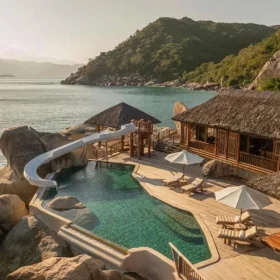
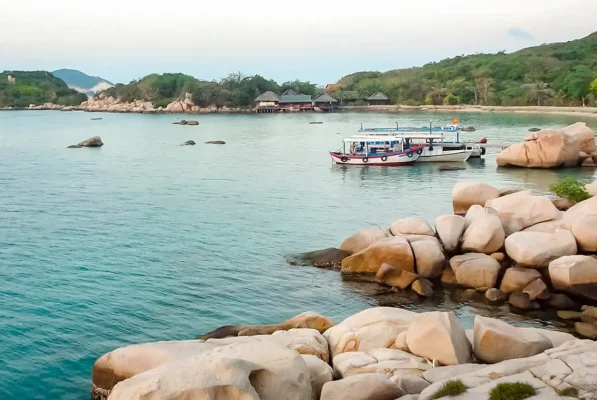
Whale Island Resort is located on Hon Ong Island, a remote, uninhabited island within Van Phong Bay. The island’s name literally means “Whale Island,” reflecting centuries of whale worship traditions among coastal fishing communities.
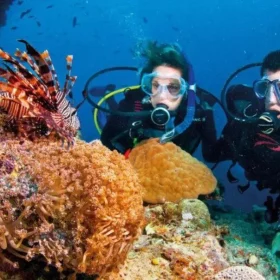
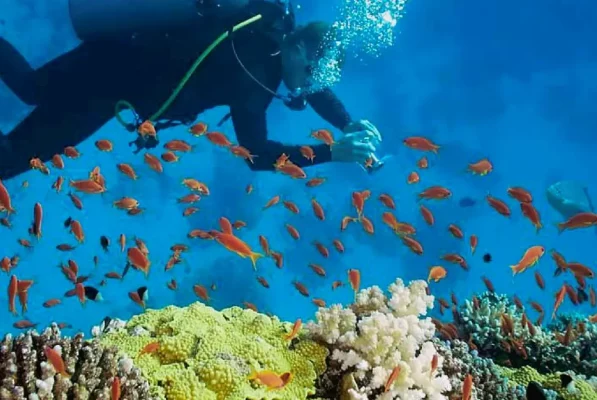
The resort operates PADI-certified diving and snorkeling programs led by experienced dive guides who understand local weather patterns, marine habitats, and the best seasonal conditions for wildlife encounters. This helps guests increase their chances of observing marine life in natural conditions, including species linked to whale island vietnam wildlife.
Staying on the island offers a clear advantage over day trips from Nha Trang. Wildlife encounters in Van Phong Bay are most common at sunrise, before winds and boat traffic increase. A 6:30 AM departure from the island can offer a completely different experience compared to arriving later in the morning.
Exploring the Van Phong Bay marine ecosystem
Whale Island Resort does not operate dedicated whale watching tours or structured marine mammal excursions. However, due to its location in one of the most untouched areas of Van Phong Bay, guests may still encounter marine life during nature-based activities.
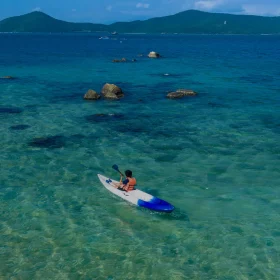
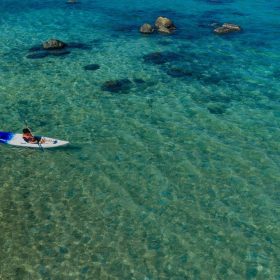
Popular activities include snorkeling, scuba diving, kayaking, and boat trips around the bay. These experiences offer close access to coral reefs, colorful reef fish, and coastal bird species.
On rare occasions, larger marine animals such as dolphins may be seen offshore. However, these encounters are completely natural and cannot be predicted.
All marine activities at Whale Island Resort follow responsible tourism principles. We do not feed, attract, or interfere with wildlife, and encourage respectful, low-impact observation of nature.
Conclusion
The story of whale watching Vietnam is not about commercial tours, but about exploring a coastline where whales, dolphins, and marine mammals have long been part of both nature and culture. For travelers interested in marine ecosystems, Van Phong Bay and Hon Ong Island offer one of Vietnam’s most unique coastal environments, as well as a more responsible way to experience wildlife observation.
FAQ
1. Are there official whale watching tours in Vietnam?
Currently, there are no officially organized or commercial whale watching tours in Vietnam. Most whale sightings are rare and recorded by fishermen, researchers, or people frequently at sea.
2. What marine life can be seen in Van Phong Bay?
Van Phong Bay is home to dolphins, sea turtles, reef fish, seabirds, and a variety of marine invertebrates. Wildlife sightings depend entirely on natural conditions.
3. When is the best time to explore Van Phong Bay?
The best period is generally from March to August, when sea conditions are calm and underwater visibility is good for snorkeling and diving.
4. Is wildlife observation conducted responsibly?
Yes. All activities at Whale Island Resort follow eco-tourism principles. Marine life is observed from a safe distance without feeding, attracting, or disturbing natural behavior.
Ngọc Vân
3D2N SUMMER ON WHALE ISLAND
From 126 USD USD/Guest/Combo
3D2N AUTUMN CALLS FROM WHALE ISLAND – NATIONAL DAY 2/9
From 118 USD/Guest/Combo