Vietnamese Seafood Pancake: Healthy And Crispy Dishes To Satisfy Your Taste Buds
| ReviewVietnamese cuisine is celebrated around the world for its balance of fresh ingredients, vibrant flavors, and regional diversity. Among the many iconic dishes that showcase this culinary heritage, the Vietnamese seafood pancake stands out as a favorite among both locals and international travelers. Crispy on the outside, flavorful on the inside, and packed with fresh seafood, this dish perfectly reflects Vietnam’s rich coastal culture.
From bustling street food stalls to seaside restaurants along the central coast, Vietnamese seafood pancakes can be found in many forms. Whether filled with shrimp or a combination of fresh seafood, these savory pancakes offer a delicious introduction to Vietnam’s culinary traditions.
If you are planning a trip to Vietnam, tasting a Vietnamese seafood pancake should be high on your food bucket list. Beyond its irresistible flavor, the dish tells a story of regional ingredients, local cooking techniques, and the country’s deep connection to the sea.
What Makes Vietnamese Seafood Pancake Unique?
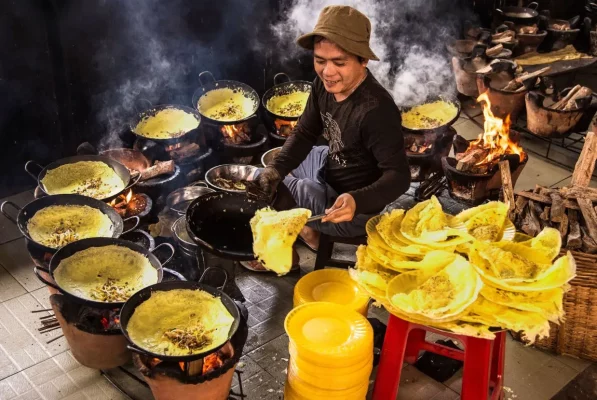
One of the defining features of a Vietnamese seafood pancake is its crispy golden shell. The batter is typically made from rice flour, turmeric powder, and water, creating a thin pancake that becomes delightfully crunchy when cooked. Unlike thick Western-style pancakes, Vietnamese pancakes are light and crisp, allowing the seafood filling to shine.
Fresh seafood is another element that sets this dish apart. In Vietnam’s coastal regions, fishermen bring in daily catches of shrimp, squid, scallops, and other seafood, which are often incorporated into the pancake. The freshness of these ingredients contributes to the naturally sweet and savory flavor that makes the dish so appealing.
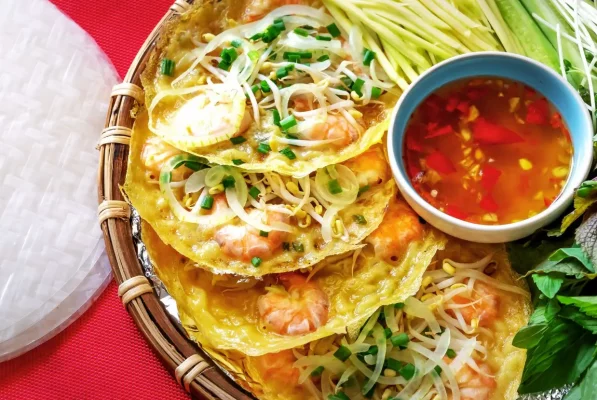
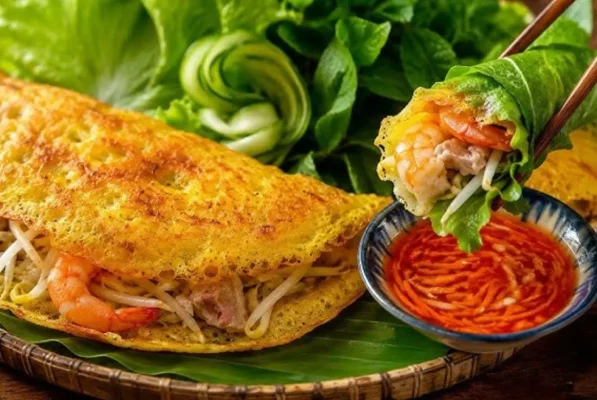
What also makes Vietnamese seafood pancakes unique is the dipping sauce. While the crispy pancake and fresh seafood provide the foundation of the dish, the sauce brings all the flavors together. Typically made with fish sauce, lime juice, garlic, chili, and sugar, it creates a balance of sweet, salty, sour, and spicy notes that enhances every bite. Without the dipping sauce, the experience would feel incomplete.
3 Must – Try Vietnamese Seafood Pancakes Across Vietnam
Vietnam’s geography stretches more than 1,600 kilometers from north to south, resulting in remarkable culinary diversity. The Vietnamese seafood pancake exists in several regional variations, each with its own unique characteristics.
Vietnamese Seafood Pancakes (Bánh Xèo – Sizzling Crepe)
When people refer to a Vietnamese seafood pancake, they are often talking about Bánh Xèo. The name “Bánh Xèo” comes from the sizzling sound the batter makes when poured onto a hot pan.
This popular dish features a thin, crispy shell made from rice flour and turmeric. The filling typically includes shrimp, squid, bean sprouts, and sometimes pork. Once cooked, the pancake is folded in half and served alongside fresh herbs, lettuce, cucumber, and dipping sauce.
Bánh Xèo is particularly popular in Southern and Central Vietnam, where local cooks often adapt the recipe using regional ingredients. Coastal destinations such as Nha Trang and Phu Yen are especially known for their seafood-filled versions, thanks to easy access to fresh catches from the sea.
How it is made:
- The batter is poured into a hot pan and spread thinly.
- Seafood, bean sprouts, and other fillings are added.
- The pancake is cooked until golden and crispy.
- It is folded in half and served immediately with herbs and dipping sauce.
What makes Bánh Xèo (Sizzling Crepe) unique?
- Large, thin, and extra crispy.
- Popular throughout Southern and Central Vietnam (Da Nang, Nha Trang, Phu Quoc)
- Typically wrapped with fresh herbs and vegetables before eating.
- Known for its dramatic sizzling cooking process.
Vietnamese Mini Seafood Pancakes (Bánh Khọt)
Another beloved variation is Bánh Khọt, often described as Vietnamese mini seafood pancakes. Originating in Southern Vietnam, these bite-sized pancakes are cooked in small round molds, resulting in a crispy exterior and soft center.
Each pancake is typically topped with a fresh shrimp and garnished with scallion oil. Because of their mini size, they are easy to share and are often enjoyed as a social dish among family and friends. Their attractive presentation also makes them popular among travelers seeking authentic Vietnamese street food experiences.
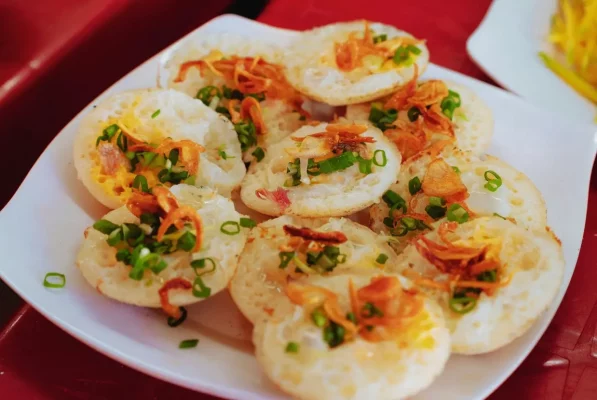
How it is made:
- Batter is poured into small round molds.
- Shrimp is placed on top of each pancake.
- The pancakes are cooked until the edges become crispy while the center remains soft.
- Finished with scallion oil and served with herbs and fish sauce.
What makes Bánh Khọt unique?
- Small, bite-sized portions.
- Crispy outside and soft inside.
- Usually topped with a whole shrimp.
Hue Savory Pancake (Bánh Khoái)
In Central Vietnam, particularly in Hue, travelers can discover Bánh Khoái. While it resembles Bánh Xèo in appearance, Bánh Khoái has a thicker and crispier shell and is often richer in flavor.
The filling commonly includes shrimp, pork, eggs, and vegetables. What truly distinguishes Bánh Khoái is its accompanying sauce. Unlike the lighter fish sauce commonly served with Bánh Xèo, Bánh Khoái is paired with a thick, flavorful dipping sauce made from peanuts, sesame, pork liver, and spices.
This richer flavor profile reflects the sophisticated culinary traditions of Hue, the former imperial capital of Vietnam. For food enthusiasts interested in regional specialties, Bánh Khoái offers a fascinating variation of the Vietnamese seafood pancake experience.
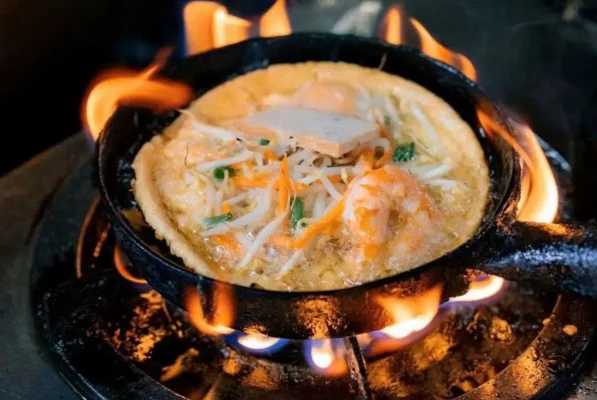
How it is made:
- A thicker batter is poured into a hot pan.
- Shrimp, pork, egg, and vegetables are added.
- The pancake is cooked until deeply golden and crispy.
- Served with fresh vegetables and Hue’s signature peanut-based dipping sauce.
What makes Bánh Khoái unique?
- Thicker and richer than Bánh Xèo.
- Features a more substantial filling.
- Served with a rich peanut-liver sauce instead of traditional fish sauce.
- Reflects Hue’s sophisticated royal culinary.
How To Eat Vietnamese Seafood Pancake Like A Local
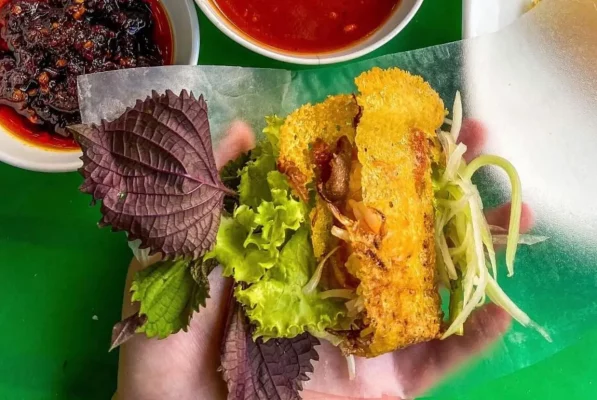
Unlike many pancakes around the world, a Vietnamese seafood pancake is rarely eaten with a knife and fork. Instead, it is enjoyed as an interactive meal that combines fresh vegetables, aromatic herbs, and flavorful dipping sauce.
Step 1: Wrap it with fresh greens and herbs
Break off a small piece of the pancake and place it on a rice paper and a large leafy green such as lettuce or mustard greens. Add a selection of fresh herbs, which may include mint, basil, cilantro, perilla leaves, or Vietnamese fish mint, depending on the region. The herbs add freshness and balance the richness of the crispy pancake.
Step 2: Roll it up
Gently wrap the leafy greens around the pancake and herbs to create a compact roll. This method allows all the ingredients to be enjoyed together in one bite while adding extra crunch and freshness.
Step 3: Dip it into the sauce
Before taking a bite, dip the roll into a Vietnamese seafood dipping sauce. The combination of fish sauce, lime juice, garlic, chili, and sugar enhances the natural sweetness of the seafood and ties all the flavors together.
Step 4: Enjoy it with pickled vegetables
Many Vietnamese seafood pancakes are served alongside pickled carrots and daikon radish. Their slightly sweet and tangy flavor provides a refreshing contrast to the crispy pancake and rich dipping sauce, creating a more balanced dining experience.
This unique way of eating is one of the reasons why Vietnamese seafood pancakes are so memorable. Every bite combines crispy textures, fresh herbs, seafood flavors, and vibrant sauces, offering a true taste of Vietnam’s culinary culture.
Where To Enjoy The Best Vietnamese Seafood Pancake
One of the best ways to discover Vietnam’s rich food culture is by tasting regional variations of its famous seafood pancakes. From bustling cities to charming coastal towns, each destination offers its own interpretation of this beloved dish.
Hanoi & Ho Chi Minh City
Vietnam’s two largest cities are excellent places to sample different types of Vietnamese seafood pancakes from across the country.
Hanoi:
- Bánh Xèo Sáu Phước – Approx. 80,000–150,000 VND/person
- Bánh Xèo Zòn Pancake – Approx. 100,000–200,000 VND/person
- Bánh Xèo Miền Trung Thanh Diệu – Approx. 70,000–150,000 VND/person
Ho Chi Minh City:
- Bánh Xèo 46A Đinh Công Tráng – Approx. 100,000–250,000 VND/person
- Bánh Xèo Ăn Là Ghiền – Approx. 120,000–250,000 VND/person
- Bánh Khọt Cô Ba Vũng Tàu – Approx. 100,000–200,000 VND/person
- Bánh Khọt 18B – Approx. 80,000–180,000 VND/person
Central Vietnam Coastal Towns
Central Vietnam is considered one of the best regions to experience authentic Vietnamese seafood pancakes thanks to its rich culinary heritage and access to fresh seafood.
Hue (Bánh Khoái – Hue Savory Pancake):
- Hồng Mai Restaurant – Approx. 80,000–150,000 VND/person
- Lạc Thiện Restaurant – Approx. 60,000–120,000 VND/person
- Bánh Khoái Hạnh – Approx. 80,000–180,000 VND/person
Da Nang (Bánh Xèo – Vietnamese Seafood Pancakes):
- Bánh Xèo Bà Dưỡng – Approx. 80,000–180,000 VND/person
- Bánh Xèo Tôm Nhảy Năm Hiền – Approx. 100,000–200,000 VND/person
Hoi An (Bánh Xèo – Vietnamese Seafood Pancakes):
- Giếng Bá Lễ – Approx. 100,000–250,000 VND/person
- Bánh Xèo Hải Đảo – Approx. 80,000–180,000 VND/person
Nha Trang – Van Phong Bay
- Bánh Khọt Cô Ba Vũng Tàu (Nha Trang) – Approx. 70,000–150,000 VND/person
- Bánh Xèo Mực Cô Tám – Approx. 80,000–180,000 VND/person
- Ninh Hoa Local Eateries (around 30–40 km north of Nha Trang, Van Phong Bay) – Small family-run restaurants serving regional-style seafood Bánh Xèo with fresh local ingredients. Approx. 100,000–250,000 VND/person
Whether you choose the bustling food streets of Ho Chi Minh City, the culinary heritage of Hue, or the pristine coastline of Van Phong Bay, each destination offers a memorable way to experience Vietnam’s beloved seafood pancakes while discovering the country’s rich coastal cuisine.
Vietnamese seafood pancake is more than a meal, it is a cultural ritual that brings together the best of Vietnam’s coastal bounty. At Whale Island Resort, every dining experience celebrates this spirit: fresh seafood from Vân Phong Bay, traditional recipes, and the unhurried joy of eating by the sea. Come taste the real thing.
FAQ
1. What is Vietnamese seafood pancake?
Vietnamese seafood pancake (bánh xèo) is a crispy, golden rice crepe made with turmeric-spiced batter, filled with fresh shrimp, squid, bean sprouts, and served wrapped in lettuce with a tangy fish sauce dip. It is one of Vietnam’s most beloved street foods.
2. What does “bánh xèo” mean in English?
“Bánh xèo” literally means “sizzling cake” — named for the dramatic sizzling sound the rice batter makes when poured into a hot oiled pan.
3. Is Vietnamese seafood pancake gluten-free?
Traditional bánh xèo batter is made from rice flour and coconut milk, making it naturally gluten-free. However, always confirm with the restaurant, as some recipes add cornstarch or tempura flour that may contain gluten.
3. What is the difference between bánh xèo and bánh khoái Huế?
Both are crispy Vietnamese pancakes, but bánh khoái (Hue-style) is smaller, thicker, and served with fermented shrimp paste sauce (mắm nêm). Bánh xèo in southern Vietnam is larger and served with a lighter fish sauce (nước chấm).
4. Can I make Vietnamese seafood pancake at home?
Yes. The key is using ice-cold water in the batter for maximum crispiness, and cooking over high heat with enough oil to fry the edges. Fresh shrimp and squid are essential for an authentic seafood version, frozen protein will release excess water and make the pancake soggy.
3D2N SUMMER ON WHALE ISLAND
From 126 USD USD/Guest/Combo
3D2N AUTUMN CALLS FROM WHALE ISLAND – NATIONAL DAY 2/9
From 118 USD/Guest/Combo