Coral Reef Vietnam Guide: Best Islands, Snorkeling Tours & Prices
| ReviewVietnam attracts travellers not only with long beaches, green islands and peaceful bays, but also with rich marine ecosystems beneath clear blue waters. When learning about coral reef Vietnam, travellers often think of Nha Trang, Con Dao or Phu Quoc. Each destination has its own character: some are suitable for beginner divers, some stand out for conservation, while others are ideal for a quiet nature-based island stay. Among them, the Nha Trang area, especially Hon Ong Island, is one of the most pristine diving spots.
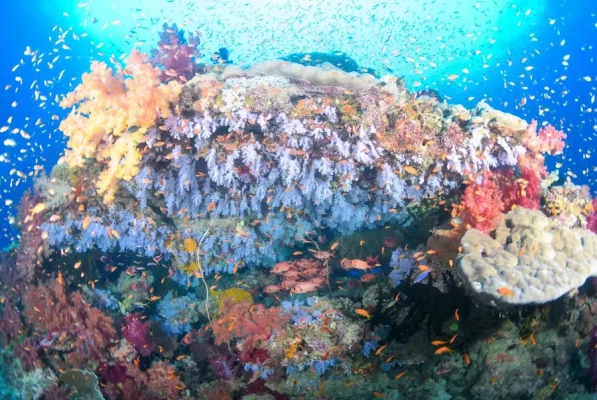
Features of Coral Reef Vietnam and How to Get There
Before joining a coral reef diving or snorkeling trip, travellers often want to know where the reefs are located. Below is detailed information about the distance and transportation to popular coral reef sites:
-
Distance: Coral reefs are usually located from 50 metres to more than 10 kilometres from shore.
-
Nearshore reefs: For coastal coral reefs, you usually only need to swim about 50–100 metres.
-
Speedboat transfer: For offshore islands, the travel time is usually about 30 to 45 minutes.
-
Wooden boat transfer: If travelling by wooden boat, the journey may take about 1 to 2 hours.
Common Types of Coral Found in Vietnam’s Waters
Vietnam’s marine ecosystem is extremely rich, with many diverse coral species. At diving sites, you can often see the following common types of coral:
-
Hard Coral: The most common types include Acropora and Porites, forming the solid foundation of coral reefs.
-
Soft Coral: These corals do not have a hard skeleton and often sway gently with ocean currents.
-
Brain Coral: This coral has a large round shape with winding grooves resembling the human brain.
-
Gorgonian Coral: This fan-shaped coral is visually striking and usually grows in deeper, clearer waters.

Beautiful Pristine Coral Reef Diving Destinations
Each coastal region in Vietnam offers different natural conditions and coral reef diving services. Below is detailed information about the most outstanding destinations.
1. Nha Trang (Khanh Hoa)
Nha Trang is one of the first destinations mentioned when talking about beautiful coral reefs in Vietnam. The area is famous for diving tours, snorkeling, island hopping and diverse marine ecosystems around Nha Trang Bay.
Hon Mun is the most outstanding site in Nha Trang coral reef diving tours. Nha Trang Bay Marine Protected Area includes many islands such as Hon Tre, Hon Mieu, Hon Tam, Hon Ong and surrounding waters. The total area is about 160 km². This is why Nha Trang is often considered a “classic” destination for travellers who want to learn about diving and coral reefs in Vietnam.
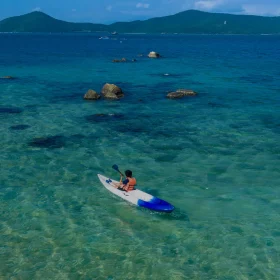
Snorkeling tours in Nha Trang usually last half a day or a full day. Tours often combine Hon Mun, Hon Mot, Hon Tam or several diving sites. If you want to see coral reefs in shallow water and enjoy a private island stay, Hon Ong is a reasonable choice.
-
Best time for coral reef diving: From March to August every year. This is Nha Trang’s dry season.
-
Popular itinerary: Nha Trang tours usually pass through Hon Mun, Hon Mot and Hon Tam.
-
Tour includes: Hotel transfer, speedboat, snorkeling equipment, life jacket and lunch.
-
Nha Trang diving tour price: Some operators offer Hon Mun – Hon Mot diving tours at around VND 650,000/adult and VND 450,000/child.
-
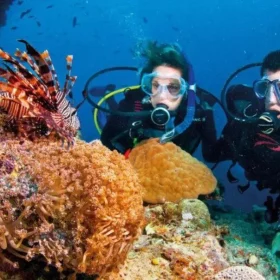
Scuba diving price: From around VND 1,000,000, depending on the number of dives and certification level.
-
Diving at Hon Ong: The coral reef lies close to shore, about 40 minutes away by wooden boat. Snorkeling costs only around VND 200,000–300,000/person. Scuba diving costs around VND 1,600,000/person.
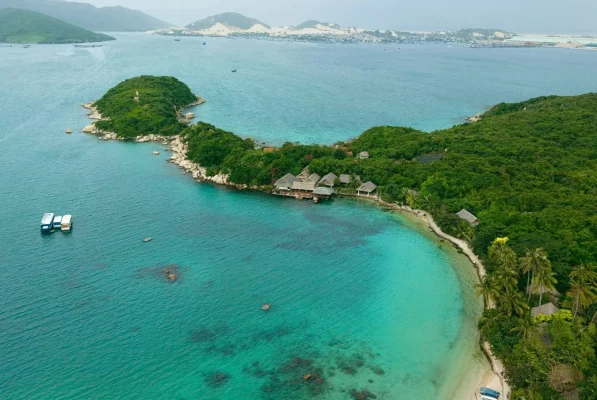
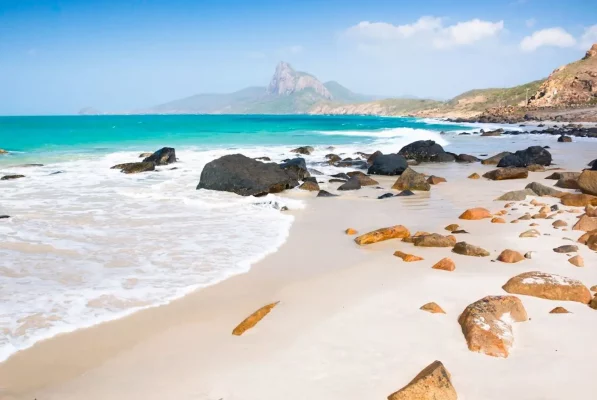
2. Con Dao (Ba Ria – Vung Tau)
Con Dao is one of the most outstanding destinations for travellers interested in marine nature and conservation. The coral reefs here have high ecological value and serve as habitats, feeding grounds and breeding areas for many marine species.
Con Dao National Park states that the main coral groups here include Acropora, Porites, Pachyseris, Montipora and many others. The coral reef ecosystem plays an important role in balancing the marine environment and protecting Con Dao’s coastline. Some tourism sources also record that Con Dao has more than 360 coral species across 61 genera and 17 families, making it one of Vietnam’s diverse coral reef ecosystems.
Snorkeling tours in Con Dao are usually suitable for nature lovers who enjoy clear waters, quiet islands and conservation-focused activities.
-
Best time: The ideal coral reef snorkeling season lasts from March to September.
-
Popular itinerary: Island tours often combine Hon Bay Canh and Hon Cau.
-
Tour includes: Speedboat, snorkeling equipment, sea turtle conservation fee and tour guide.
-
Standard tour price: Snorkeling tours usually range from VND 700,000 to VND 800,000.
-
Small-group tour: Specialised tours combined with turtle watching cost around VND 1,250,000.
3. Cu Lao Cham (Quang Nam)
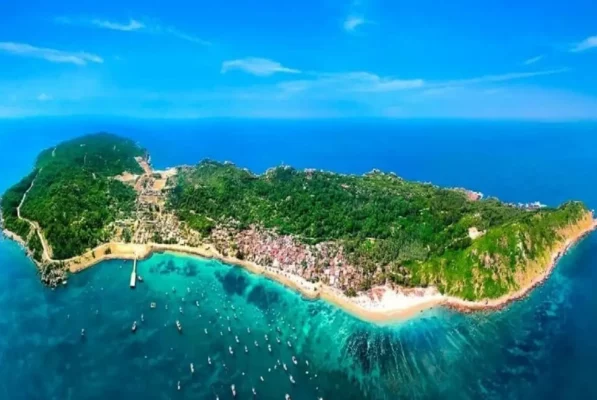
Cu Lao Cham is a suitable choice for travellers staying in Hoi An or Da Nang. The area belongs to the Cu Lao Cham – Hoi An Biosphere Reserve, which is described by UNESCO as home to marine species such as coral, molluscs, crustaceans and seaweed.
Cu Lao Cham tours are usually operated by speedboat and combine island sightseeing, swimming, lunch and snorkeling. This is an easy-to-access option for families or groups of friends on a one-day trip.
-
Best time: The dry season from March to August is the best time for coral reef viewing. The weather is clear, sunny and favourable for seeing coral below the surface.
-
Popular itinerary: Island tours often visit Bai Lang, Bai Chong and the Hon Dai protected area.
-
Tour includes: Speedboat, island entrance ticket, snorkeling equipment and seafood lunch.
-
Estimated tour price: A full-day package ranges from VND 850,000 to VND 1,200,000/person.
4. Quy Nhon (Binh Dinh)
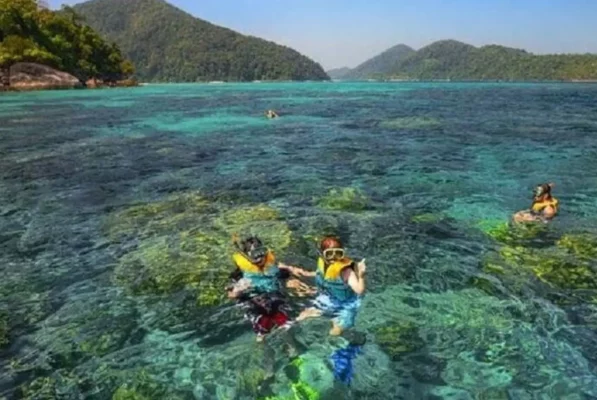
Quy Nhon – Binh Dinh is a suitable destination for travellers who want to combine beach time, island hopping and gentle coral reef snorkeling. The most notable coral sites are usually around Ky Co, Bai Dua, Hon Kho and the waters of Nhon Ly and Nhon Hai.
Coral in Quy Nhon usually includes hard coral, rocky reefs, small fish and nearshore marine life. The coral colours may not be as vivid as in some offshore areas, but they are easy to access and suitable for beginners. Therefore, Quy Nhon is a good choice for families, groups of friends and first-time snorkeling travellers.
-
Ideal time: The most favourable climate and calmest sea conditions are from March to early September.
-
Popular itinerary: Speedboats take travellers to explore Ky Co, Hon Kho and snorkel at Bai Dua.
-
Types of coral: This area is known for hard coral, gorgonian coral and colourful sea anemone beds.
-
Distance & transportation: It is about 15–20 minutes from the mainland by high-speed canoe.
-
Estimated tour price: A full package including canoe, snorkeling gear and seafood lunch costs around VND 650,000–850,000/person.
5. Vinh Hy Bay (Ninh Thuan)
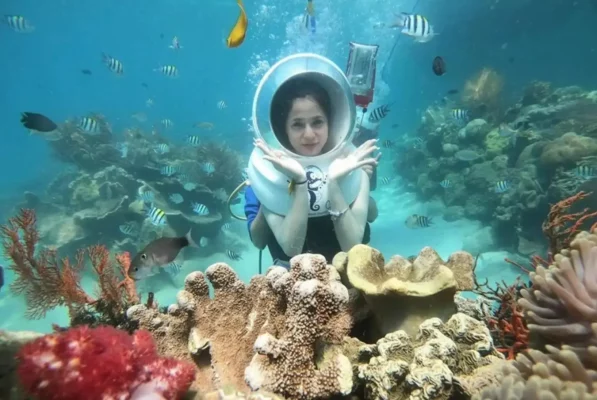
Vinh Hy is located in Ninh Thuan, near Nui Chua National Park, and is known for its bay scenery, blue waters and gentle marine experiences. It is not a professional diving destination like Nha Trang, but it is suitable for travellers who want boat sightseeing, snorkeling or a glass-bottom boat experience.
Some Vinh Hy tours combine Hang Rai, glass-bottom boat rides, snorkeling and lunch. Tours departing from Mui Ne or Phan Rang may take a full day due to the long travel time. When featuring Vinh Hy in the article, it should be positioned as a scenic bay and light-snorkeling destination, rather than exaggerated as the best coral reef site in Vietnam.
-
Best time: From February to July, the seawater is especially clear and calm.
-
Popular itinerary: Tours usually combine Hang Rai sightseeing and coral viewing around the bay.
-
Tour includes: Glass-bottom boat, life jacket, shallow-water snorkeling gear and lunch on a floating raft.
-
Estimated tour price: Glass-bottom boat and shallow snorkeling cost around VND 200,000–400,000.
6. Pearl Island Phu Quoc (Kien Giang)
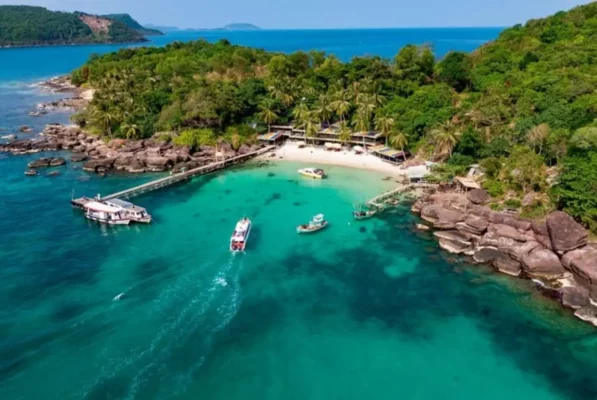
Phu Quoc is suitable for beginners, families and groups who want to combine a day island tour with coral reef snorkeling. Common destinations in Phu Quoc snorkeling tours include Hon Gam Ghi, Hon Mong Tay, Hon May Rut, Hon Thom and the An Thoi Archipelago. Hon Gam Ghi is often introduced as an important stop in 3-island or 4-island tours in southern Phu Quoc, with the main activities being coral reef snorkeling, swimming and photography.
Phu Quoc snorkeling tour prices vary significantly depending on whether the tour is shared or private, whether it uses a speedboat, includes lunch, and how many islands are visited. Some small-group or speedboat tours around Hon Gam Ghi are listed from about VND 1,350,000–1,500,000/person on booking platforms. Simpler wooden boat tours may be cheaper, such as two-island fishing and snorkeling tours listed at around VND 552,000/person.
-
Best time: The dry season from November to April is when the sea is calmest.
-
Popular itinerary: The An Thoi Archipelago, including Hon Gam Ghi, Hon Mong Tay and Hon May Rut.
-
Tour includes: Wooden boat or speedboat, snorkeling equipment, lunch, SUP paddling and flycam filming.
-
Wooden boat tour price: Basic shared-group experiences usually range from VND 550,000 to VND 700,000.
-
VIP speedboat tour price: Small-group speedboat tours cost from VND 1,350,000 to VND 1,500,000.
Estimated Coral Reef Snorkeling and Diving Tour Prices in Vietnam
The prices below are for reference only, as they may vary depending on season, weather, group size, pickup point, boat type, equipment and each operator’s policy.
| Destination | Experience Type | Estimated Price | Best For |
|---|---|---|---|
| Nha Trang / Hon Mun | Half-day snorkeling | Around VND 650,000/adult, VND 450,000/child | Beginners and day-tour travellers |
| Nha Trang | Scuba diving | From around VND 1,000,000/person | Travellers who want deeper diving |
| Hon Ong / Whale Island Resort | Snorkeling | Around VND 200,000–300,000/person/session | Families, beginners and resort guests |
| Hon Ong / Whale Island Resort | Scuba diving | Around VND 1,600,000/person/session | Travellers who want guided diving |
| Con Dao | 4–5-hour snorkeling | Around VND 700,000–800,000/person | Nature lovers and pristine island travellers |
| Con Dao | Small-group / conservation tour | Around VND 1,250,000/person | Small groups and conservation experiences |
| Cu Lao Cham | One-day snorkeling tour | Around VND 850,000–1,200,000/person | Travellers from Hoi An or Da Nang |
| Quy Nhon / Binh Dinh | Ky Co, Hon Kho and Bai Dua tour | Around VND 650,000–850,000/person | Families, groups of friends and beginner snorkelers |
| Vinh Hy | Snorkeling / glass-bottom boat | Around VND 200,000–400,000/person | Travellers who prefer scenic bays and light experiences |
| Phu Quoc | Wooden boat snorkeling tour | Around VND 550,000–700,000/person | Beginners, families and basic island tours |
| Phu Quoc | VIP speedboat snorkeling tour | Around VND 1,350,000–1,500,000/person | Small groups and travellers who prefer more private island tours |
Snorkeling, Scuba Diving or Glass-Bottom Boat: Which Should You Choose?
Snorkeling is the simplest option. Travellers use a mask, snorkel and life jacket to observe coral reefs in shallow water. This activity is suitable for beginners, children, families and travellers without diving certification.
Scuba diving is suitable for travellers who want to dive deeper into the ocean. This activity requires a professional guide, specialised equipment and strict safety procedures. In some places, travellers without certification can still join a trial dive, but careful instruction is required.
Glass-bottom boats are suitable for non-swimmers, older travellers or families with small children. However, travellers should still choose responsible operators that do not anchor directly on coral reefs or harm the marine ecosystem.
Responsible Travel Tips When Visiting Coral Reefs
Coral is very fragile. Touching or stepping on coral can damage it. Therefore, when joining a coral reef snorkeling or diving tour in Vietnam, travellers should keep the following in mind:
- Do not touch, stand on or break coral as a souvenir.
- Do not feed fish casually, as this may change their natural behaviour.
- Do not litter, especially plastic bags, plastic bottles and food packaging.
- If using sunscreen, choose coral-friendly products whenever possible. Look for mineral-based ingredients such as Zinc Oxide and Titanium Dioxide. These ingredients are generally considered less harmful to marine environments and coral reefs.
- Travellers should also choose tours where guides clearly explain coral protection rules. Avoid operators that take guests to recovering reef areas or organise overcrowded activities. In places such as Nha Trang, where coral ecosystems have faced strong pressure, responsible tourism is even more important.
Conclusion
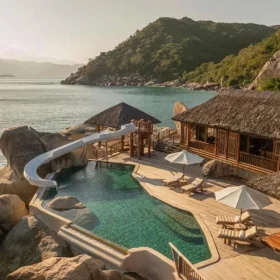
Coral reefs in Vietnam are a fascinating natural wonder, not only for ocean lovers but also for travellers interested in sustainable tourism. Nha Trang stands out thanks to its large pristine coral reef areas. Hon Ong Island in Van Phong Bay offers a quieter alternative, suitable for guests who want to relax and easily observe coral reefs. Other destinations such as Con Dao, Cu Lao Cham, Vinh Hy and Phu Quoc make Vietnam’s coral reef landscape even more diverse.
No matter which destination travellers choose, the most important thing is to experience the ocean responsibly. Coral is not only something beautiful to admire, but also a living ecosystem. It needs to be protected so Vietnam’s blue seas can remain beautiful.
Frequently Asked Questions
1. Where are coral reefs in Vietnam mainly located?
Coral reefs in Vietnam are mainly found along the central and southern coast and around offshore islands. Notable destinations include Nha Trang – Hon Mun, Hon Ong, Con Dao, Cu Lao Cham, Vinh Hy and Phu Quoc.
2. Where is the best place to see coral reefs in Vietnam?
There is no single answer for every traveller. Nha Trang is suitable for classic diving tours, Hon Ong is ideal for a peaceful stay and gentle snorkeling, Con Dao stands out for nature conservation, while Phu Quoc is easier for beginner family groups.
3. Is Nha Trang suitable for coral reef diving?
Yes. Nha Trang is one of the most outstanding destinations for coral reef diving in Vietnam, especially around Hon Mun and Hon Ong in Van Phong Bay. However, travellers should choose responsible tourism operators because the coral ecosystem here has faced significant environmental pressure.
4. Does Whale Island Resort offer coral reef snorkeling?
Yes. Whale Island Resort in Van Phong Bay offers snorkeling and scuba diving activities. Snorkeling is suitable for beginners, families and guests looking for a gentle experience, while scuba diving is suitable for travellers who want to explore deeper with professional guidance.
5. How much does coral reef snorkeling at Whale Island Resort cost?
According to reference information from Whale Island Resort, snorkeling costs around VND 200,000–300,000/person/session, while scuba diving costs around VND 1,600,000/person/session. Prices may vary depending on season and itinerary requests.
6. Can non-swimmers see coral reefs?
Yes, but they should choose snorkeling with a proper life jacket and snorkel. They should also go with a guide or choose a glass-bottom boat for safety. Non-swimmers should not dive in deep water or areas with strong currents.
“`
3D2N SUMMER ON WHALE ISLAND
From 126 USD USD/Guest/Combo
3D2N AUTUMN CALLS FROM WHALE ISLAND – NATIONAL DAY 2/9
From 118 USD/Guest/Combo